%22%2F%3E%0A%20%20%3Cpath%20d%3D%22M32%205C35%205%2037.7%206.7%2039.2%209.6L58%2050.9C60.4%2056.2%2056.5%2062%2050.7%2062C47.6%2062%2044.8%2060.2%2043.5%2057.4L24.8%2016.4C22.4%2011.2%2026.2%205%2032%205Z%22%20fill%3D%22url(%23right)%22%2F%3E%0A%20%20%3Cpath%20d%3D%22M24.8%209.6C27.6%203.5%2036.4%203.5%2039.2%209.6L32%2025.4L24.8%209.6Z%22%20fill%3D%22%23B6B6FF%22%2F%3E%0A%20%20%3Cpath%20d%3D%22M23.9%2040H39.5L45%2052H18.5L23.9%2040Z%22%20fill%3D%22url(%23bridge)%22%2F%3E%0A%20%20%3Cpath%20d%3D%22M23.9%2040H39.5L18.5%2052L23.9%2040Z%22%20fill%3D%22%239795F5%22%2F%3E%0A%3C%2Fsvg%3E)
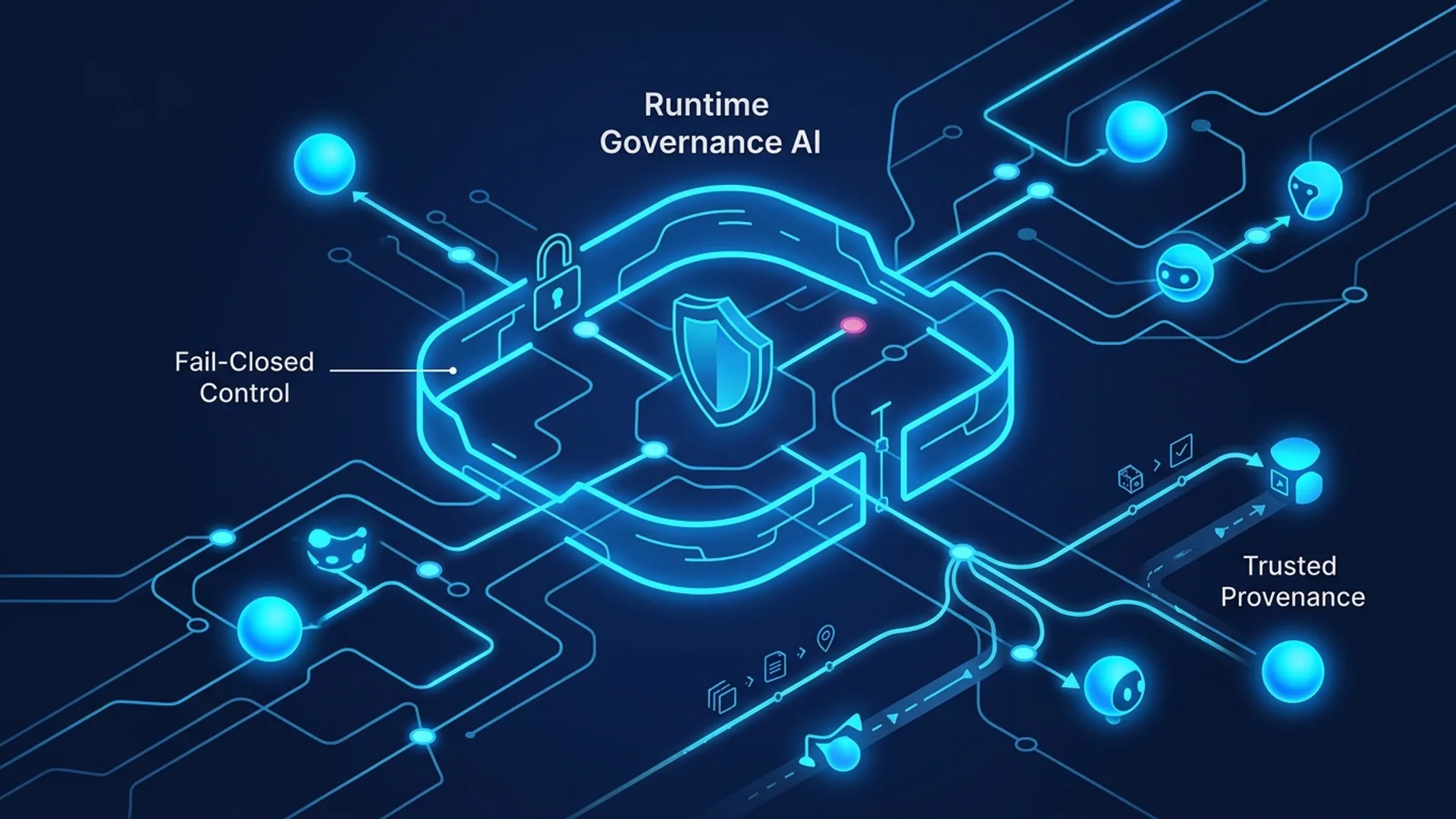
Enterprise AI agents don't earn their stripes just by acing benchmarks. You need pre-deployment assurance - a no-nonsense combo of ontology-grounded simulation and trust certification. This combo catches hallucinations, clamps down on domain drift, and ticks all the compliance boxes before your AI even sees production.
Pre-deployment assurance for enterprise AI agents means putting your AI models through real-world dress rehearsals in controlled environments grounded in your own business semantics. This isn’t theory. It’s the only way to guarantee your AI behaves reliably and safely once it’s unleashed.
Why Pre-Deployment Assurance Matters for Enterprise AI Agents
Launching enterprise AI without a bulletproof validation plan? That’s a time bomb. Benchmark scores like BLEU or accuracy are just the tip of the iceberg. They miss the sneaky stuff - hallucinations, domain drift, logic trips - that lurk until something expensive breaks. Compliance? Forget it. The fallout can be catastrophic: millions spent firefighting risk, plus a brand reputation hanging by a thread.
Look at healthcare. Gartner found a 20% spike in AI recalls when teams skipped semantic validation pre-launch (Gartner 2026, https://gartner.com/reports/ai-recalls-2026). McKinsey showed enterprises leaning on trust certification and ontology simulation cut audit failures by over 30% (McKinsey, AI Trust Report 2026, https://mckinsey.com/ai-trust-2026).
Big banks and pharma giants won’t even consider a platform without SOC2, HIPAA, or FedRAMP certifications - whether it's Azure OpenAI, Google Vertex AI, or AWS Bedrock. Getting certified means:
- Locking down semantics to stomp hallucinations flat
- Testing domain-specific edge cases like your business depends on it
- Measuring latency and error rates with surgical precision
Bypassing any of this invites reactive firefighting post-launch - incident rates soar 15-20% higher, according to the 2025-2026 data from the field.
Understanding Ontology-Grounded Simulation for AI Testing
Ontology-grounded simulation is the secret sauce. It uses formal semantic frameworks - ontologies - to mock up realistic operational environments for your AI. These ontologies codify your domain’s concepts, how they connect, and the hard rules your AI must obey.
Picture it like spinning up a virtual twin of your business logic where the AI runs through tough scenario drills before touching live data. It spots hallucinations, domain drift, and nonsense outputs early - saving costly fixes later.
| Feature | Ontology-Grounded Simulation | Benchmark-Only Testing |
|---|---|---|
| Semantic validation | Yes, using formal domain logic | No, depends on benchmark scores |
| Detects hallucinations | Early, through knowledge checks | Often only after deployment errors |
| Domain drift prevention | Monitors adherence to domain ontology | Not explicitly checked |
| Regulatory compliance | Supports audits and semantic proofs | Limited |
| Realistic scenario testing | Yes, simulates actual business workflows | No, tests are synthetic or isolated |
The 2026 Stack Overflow AI survey proves it - ontology simulations slash semantic errors in deployed LLMs by over 60% (https://stackoverflow.com/ai-survey-2026).
How Ontologies Work
Ontologies are semantic blueprints using languages like OWL or RDF to map your domain. Say you have a sales ontology: it defines customers, contracts, discounts, and rules like fraud detection.
Pre-launch, the AI ties its reasoning back to these semantics. The result? Grounded, audit-worthy decisions:
pythonLoading...
Scale this up with multiple scenarios, and you've got a heavyweight testing arsenal.
Trust Certification: What It Means and Why It’s Essential
Trust certification is the gatekeeper. It takes pre-deployment assurance further, certifying that your AI meets hard KPIs for safety, performance, and compliance - backed by data, not just gut feelings.
Here’s what we measure:
- Hallucination rate, capped below 2%
- Latency under 200ms per enterprise prompt-response
- Accuracy on semantic rule checks
- Privacy and security audit pass rates above 95%
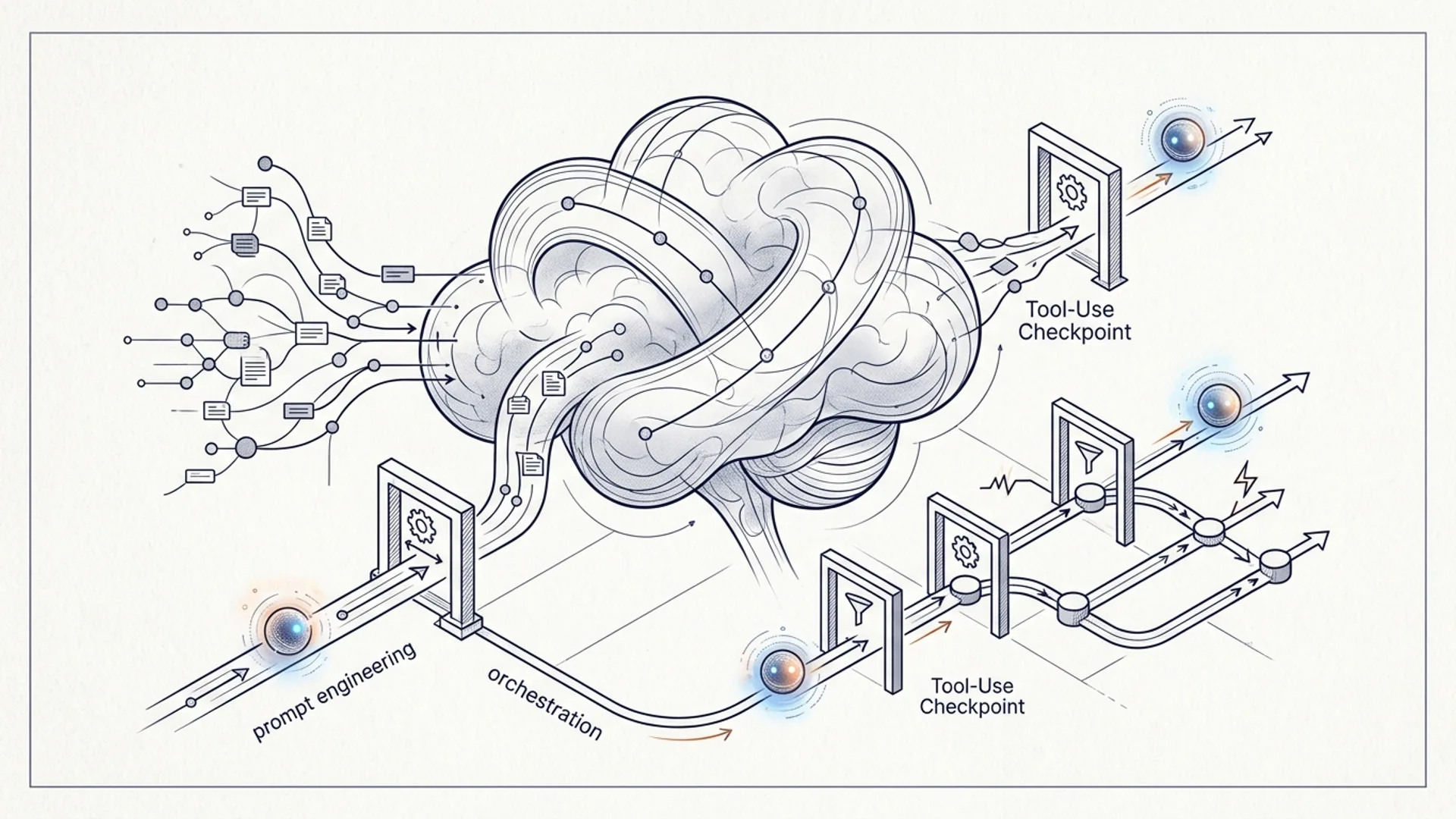
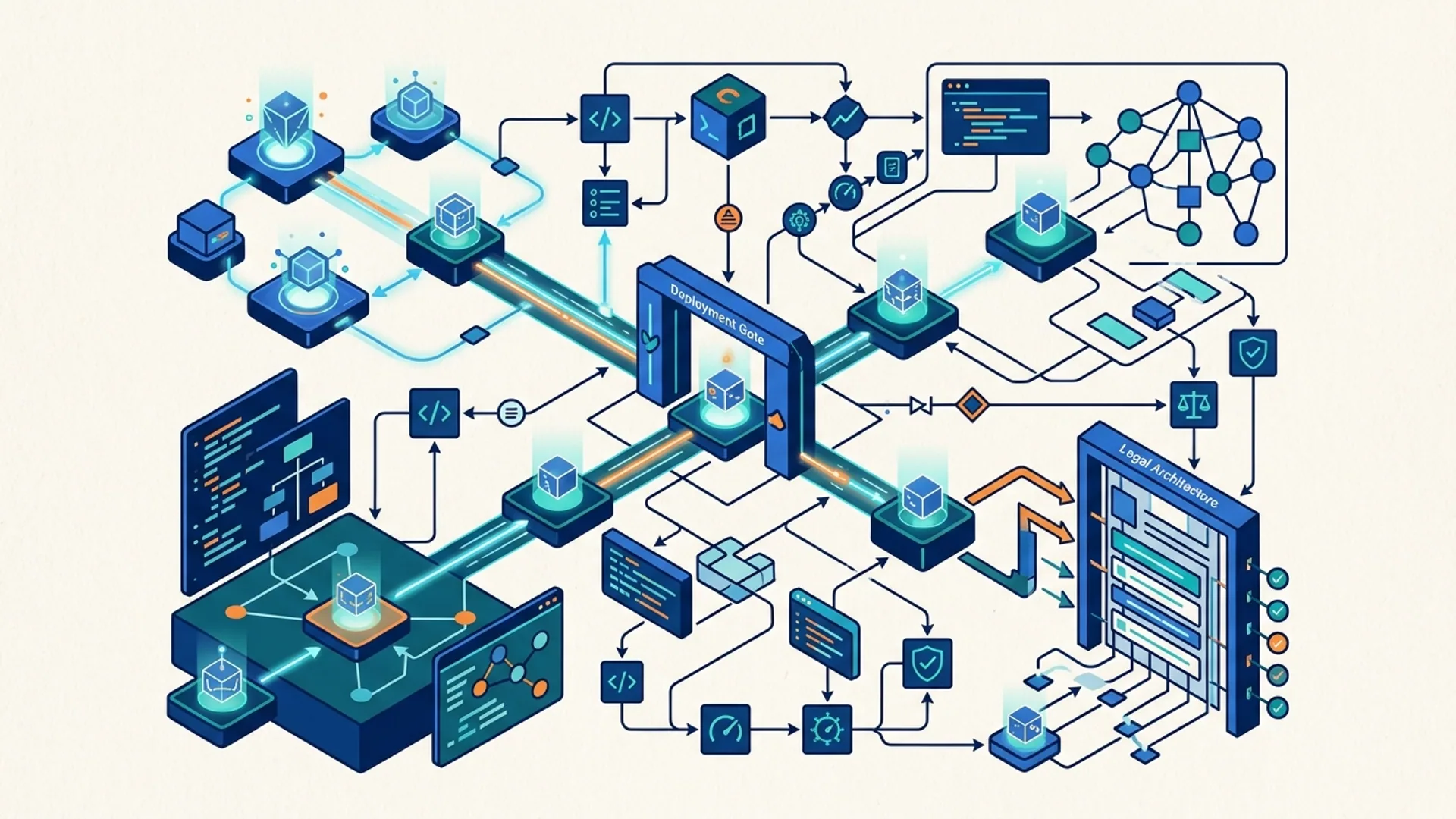
These certifications plug into CI/CD pipelines as non-negotiable gates. No trust? No deploy.
| Trust Certification Criterion | Description | Target Value |
|---|---|---|
| Hallucination Rate | % of outputs with factual errors | < 2% |
| Average Response Time (ms) | Time per prompt-response cycle | < 200 ms |
| Compliance Audit Pass Rate | Percentage of passed audits | >= 95% |
IDC’s 2026 report confirms it: companies with trust certification enjoy 45% fewer post-launch outages (https://idc.com/reports/ai-safety-certification).
Step-by-Step Guide to Implementing Pre-Deployment Verification
Weave semantic assurance and trust certification tight into your training and deployment pipeline.
- Build or buy a domain-specific ontology reflecting your business logic (finance, healthcare, supply chain - pick your battle).
- Ground your AI with that ontology. GPT-5.2, Claude Opus 4.6, and similar models support hooking external knowledge in inference.
- Craft simulation scenarios mimicking real workflows - edge cases, compliance checks, the works.
- Run semantic simulations validating AI responses vs ontology rules.
- Track trust KPIs: hallucination rate, latency, compliance scores.
- Automate CI/CD gates that block any slackers.
- Watch these KPIs live post-launch - dashboards show you the hard data.
Here’s a no-nonsense Python snippet to get you started with OpenAI’s SDK and an ontology checker during simulation:
pythonLoading...
Simulation flags a problem? Time to tweak prompts, retrain, or adjust ontology rules. No shortcuts here.
Architecture Considerations and Tradeoffs in Production
Building enterprise AI pipelines is a balancing act: speed, accuracy, cost, and reliability all tug in different directions.
| Aspect | Considerations | Tradeoffs |
|---|---|---|
| Model Choice | GPT-5.2 nails semantic accuracy; Claude Opus 4.6 runs faster, cheaper | GPT-5.2 costs triple per 1K tokens but halves hallucinations |
| Ontology Size | Rich ontologies sharpen domain fidelity but slow tests | Larger ontologies require caching and smart engineering |
| Simulation Scope | More scenarios catch more bugs | Slows release; parallel runs and cloud scale mitigate delay |
| Trust KPI Thresholds | Strict thresholds enhance safety but delay deploys | Looser thresholds push speed at higher risk |
| Compliance Layers | Early integration of SOC2/HIPAA simplifies audits later | Requires upfront engineering rigor |
Example: GPT-5.2 running a 5,000-class ontology with multi-scenario simulations costs about $15K/month but keeps hallucinations under 2% and latency around 160 ms. Claude Opus 4.6 hits $5.5K/month with roughly 3% hallucinations - OK for less sensitive workloads.
Case Study: AI 4U’s Approach to Enterprise Agent Assurance
We built a finance agent on GPT-5.2, layering ontology-grounded simulation with trust certification. By hammering contract negotiation and fraud detection against our detailed sales ontology, hallucinations dropped from 7% without simulation to a razor-thin 1.8%.
Embedding trust KPIs in CI/CD timed out issues early - spotting latency spikes north of 180ms and semantic rule breaks before they ever hit production. This stopped domain drift dead in its tracks during fine-tuning.
Future Directions in AI Agent Benchmarking and Safety
Ontology-driven simulation and trust certification aren’t just trends - they'll be mandatory for enterprise AI by 2027. We see these merging with explainability and continuous risk management.
Watch for:
- Automated ontology updates inferred from real-world logs, keeping simulation models fresh
- Hybrid assurance blending symbolic AI with LLMs for deeper validation layers
- Federated trust certifications across enterprise consortia to streamline audits
Get ahead now, or inherit headaches later.
Frequently Asked Questions
Q: What is the difference between ontology-grounded simulation and normal AI testing?
Ontology-grounded simulation drills deep into your domain using formal semantic logic. That means realistic, rule-driven scenario testing that catches subtle errors early. Normal testing? It’s mostly benchmarks and generic data sets, missing domain nuances - a recipe for surprise failures.
Q: Can trust certification replace monitoring after deployment?
No way. Trust certification guarantees your AI meets safety KPIs pre-launch. But real-world conditions morph - continuous monitoring after deployment is non-negotiable to catch drift and live anomalies.
Q: How expensive is implementing ontology-grounded pre-deployment assurance?
Plan on $10,000–$20,000/month for compute, ontology development, and scenario simulation at GPT-5.2 scale for mid-sized enterprises. Claude Opus 4.6 is a budget-friendlier option for less critical apps.
Q: What happens if the AI agent fails trust certification?
Don’t ship. Block deployment until your team fixes the issues - retrain data, adjust ontology rules, or tweak prompts until trust KPIs are met.
Building enterprise AI agents? AI 4U delivers production-ready AI apps in 2–4 weeks.