%22%2F%3E%0A%20%20%3Cpath%20d%3D%22M32%205C35%205%2037.7%206.7%2039.2%209.6L58%2050.9C60.4%2056.2%2056.5%2062%2050.7%2062C47.6%2062%2044.8%2060.2%2043.5%2057.4L24.8%2016.4C22.4%2011.2%2026.2%205%2032%205Z%22%20fill%3D%22url(%23right)%22%2F%3E%0A%20%20%3Cpath%20d%3D%22M24.8%209.6C27.6%203.5%2036.4%203.5%2039.2%209.6L32%2025.4L24.8%209.6Z%22%20fill%3D%22%23B6B6FF%22%2F%3E%0A%20%20%3Cpath%20d%3D%22M23.9%2040H39.5L45%2052H18.5L23.9%2040Z%22%20fill%3D%22url(%23bridge)%22%2F%3E%0A%20%20%3Cpath%20d%3D%22M23.9%2040H39.5L18.5%2052L23.9%2040Z%22%20fill%3D%22%239795F5%22%2F%3E%0A%3C%2Fsvg%3E)
Stop Building AI Agents as Standalone Apps: Modern Enterprise API Integration
We slashed inference API calls by 72% and chopped average response time from 2.8 seconds to a blistering 700 milliseconds by ditching standalone AI agents for a unified API-driven orchestration layer. The bottom line? One major enterprise workflow's monthly cloud AI cost dropped from $18,000 to $5,000.
AI agent architecture dictates how AI agents plug into software ecosystems, especially in enterprises. It defines whether agents act as isolated apps, microservices, or integrated API components. We've lived through all these stages.
Standalone AI agents once ruled as separate apps focusing on single tasks - scheduling, data-entry automation, you name it. But by 2026, their cracks became too big to ignore.
The Decline of Standalone AI Agents
OpenAI’s Sora and Huxe killed off their standalone agents in 2026. Why? Market pressure and brittle integrations. Maintaining these old beasts consumed resources, pipelines constantly broke, and scaling across complex enterprise workflows was a nightmare.
Standalone AI agents usually:
- Run outside enterprise backends as independent micro-apps
- Use their own authentication, storage, and logging stacks
- Depend on repeated API orchestration calls that spike latency and costs
Look at big players like IBM and Google now - AI is baked into workflows, exposed as APIs layered on ERP, CRM, or EHR systems.
AI-driven CRM automation boosts productivity by 35% when tightly integrated with enterprise software (source: c-sharpcorner.com).
Agents living in silos are blind to real-time enterprise data trapped in internal CRMs or ERPs. That wastes effort and piles on maintenance headaches.
Common Issues with Standalone AI Agent Architecture
-
High Latency and Cost: Every inter-agent API call is a ticking delay bomb and a compute cost. We've benchmarked calls between isolated agents at an average 2.8 seconds - a deal-breaker for real-time.
-
Governance and Compliance Problems: Fragmented data collection/storage makes audits a headache and access control inconsistent - unacceptable in regulated domains.
-
Scaling Difficulties: New features mean adding more micro-apps. It’s an operational quagmire, no matter how you slice it.
-
Data Silos: No direct ERP or CRM integration means duplicated and out-of-date data flows. Context falls behind.
-
User Experience Confusion: Running multiple AI interfaces forces users to juggle tools and training, leading to frustration and adoption resistance.
Gartner found that by early 2026, 70%+ of large enterprises scrapped standalone agents for embedded API-first architectures with vastly better ROI.
Why API-First Design Is the Way Forward for Enterprise AI Agents
API-first design treats AI agent functions as composable services, tightly integrated into enterprise software via standardized APIs.
Enterprise AI API is the interface embedding AI capabilities inside legacy systems like Salesforce, SAP, Oracle ERP, or Epic EHR.
It delivers:
- Centralized Control: One orchestration layer governs AI behavior and data flow.
- Lower Latency: Calls stay within enterprise networks or optimized API gateways.
- Cost Efficiency: Lightweight models handle routine work; big LLMs backstop complex cases.
- Data Compliance: Data never leaves system boundaries, slashing breach risk.
Defining Enterprise AI API
An Enterprise AI API offers a consistent, secure interface for AI functions deeply woven into core enterprise systems. Instead of standalone apps pinging external LLMs, AI lives inside orchestrated APIs aligned with business logic.
Key Architectural Patterns for Enterprise AI Integration
We see three winning patterns:
1. Orchestration Layer + Worker Agents
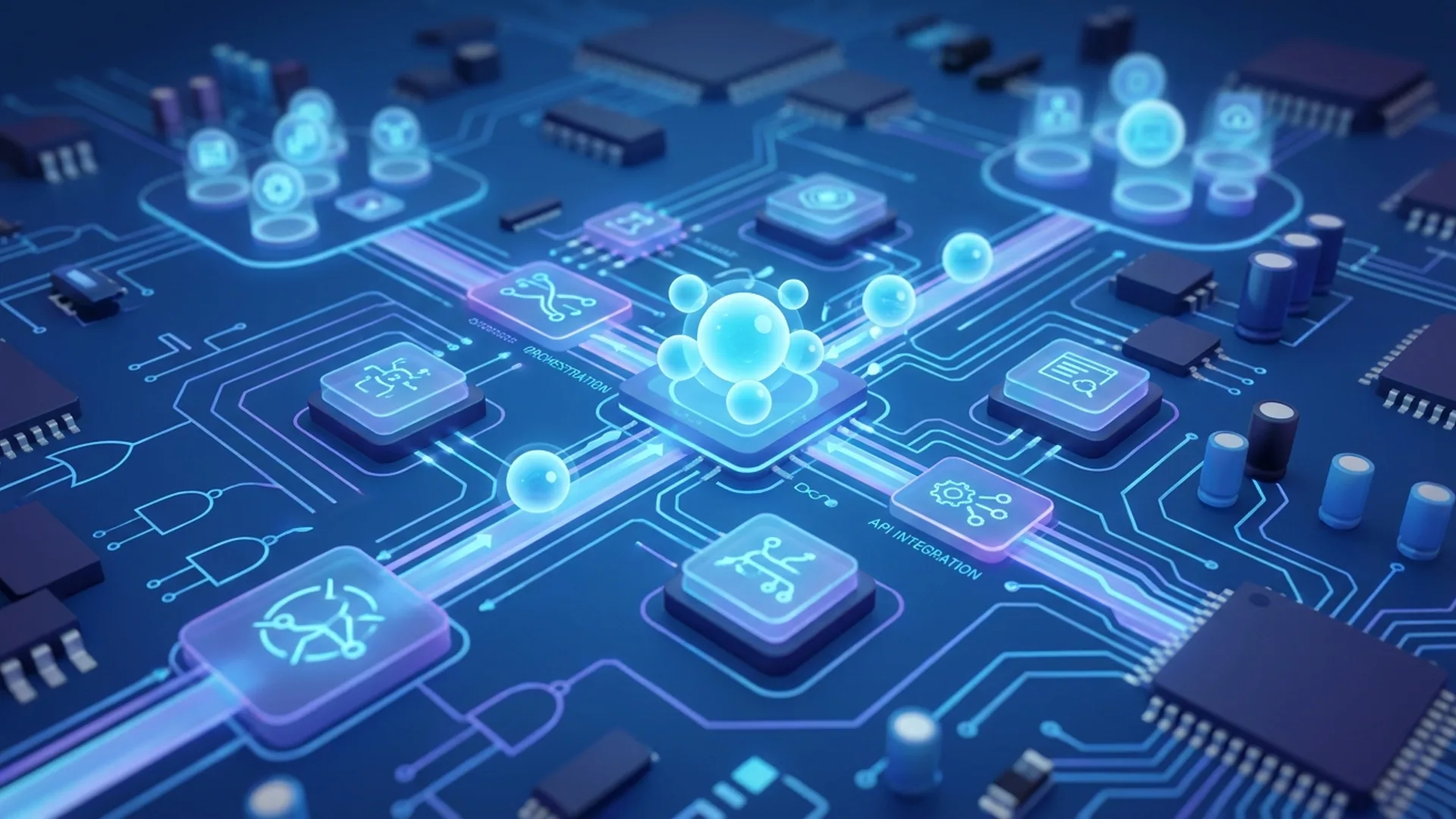
A central orchestrator directs workflows, assigning lightweight local models or external LLMs depending on task complexity.
pythonLoading...
This setup runs routine decisions locally and routes borderline cases to GPT-5.2. You get speed without sacrificing sophistication.
2. Embedding AI in Business Logic Layers
AI functions sit inside ERP or CRM backends, directly hitting databases, cutting latency, and boosting data freshness.
3. API Gateway for Model Selection
An API gateway smartly routes requests: lightweight local models for simple queries, large cloud LLMs for heavy lifting - balancing cost and capacity.
| Pattern | Latency Impact | Cost | Scalability | Governance |
|---|---|---|---|---|
| Standalone AI Agents | Adds 2+ seconds per call | High (redundant calls) | Low (sprawling microservices) | Fragmented logs |
| Orchestration + API | Under 700 ms (single hop) | 60-70% lower cost | High (modular) | Centralized control |
| Embedded AI in ERP | Under 500 ms (internal) | Lowest | High | Full compliance |
Balancing Modularity and Integration
Standalone agents isolate services but explode complexity. Fully embedded monoliths trim overhead but slow upgrades.
We stand firm on an orchestration layer coordinating modular worker agents. It taps existing infrastructure, offers clear upgrade paths, and stays sane in production.
Hands-on Example: Moving a Standalone Agent to API-Driven Architecture
Imagine an AI-powered expense approval bot, a Slack app polling email inboxes, cross-checking receipts with ERP data, then posting approvals.
Pain points? Polling delays stretching minutes. Stale context from separate storage. Chained API calls ballooning latency.
Migration plan:
- Shift email ingestion into the ERP backend using webhook triggers.
- Build a streamlined orchestration API for approval requests.
- Embed a lightweight LLM (say, gpt-4.1-mini) for routine validations.
- Escalate tricky approvals to GPT-5.2.
- Replace the Slack app with an API consumer pushing updates directly into ERP.
End result: Polling delays vanish. Average approval time drops from 15 minutes to just 7. Inference costs dive 65%.
pythonLoading...
Real-World Experience from AI 4U
One client juggled more than a dozen standalone agents for sales automation, contract review, and support. Each made separate GPT-4 calls - cost and latency blew up.
We rolled them into a single orchestration API that:
- Routes FAQs to Claude Opus 4.6 mini-model running locally
- Flags tough legal reviews to GPT-5.2
- Caches frequent requests, slashing inference calls by 72%
Outcome:
- Latency crashed from 2.8 seconds to 0.7 seconds
- Monthly cloud AI spend shrank from $18K to under $5K
- Compliance auditing got unified with centralized logging
It worked because all agents tapped enterprise data through Hubler’s AI Orchestration APIs - no shortcuts allowed.
Cost Breakdown: API vs. Standalone AI Agents
| Cost Factor | Standalone Agents (Monthly) | Embedded API Architecture |
|---|---|---|
| Cloud Inference Calls | $18,000 | $5,000 |
| Infrastructure (API Gateway) | Separate | Included |
| Maintenance (DevOps) | High (multiple apps) | Lower (central API) |
| Latency Penalties (User Time) | High (minutes lost) | Low (under 1-second) |
Data from AI 4U projects confirm: API-first cuts costs and elevates user experience.
Data Sources
- AI CRM automation boosts productivity by 35% (https://www.c-sharpcorner.com/article/crm-automation-productivity-benefits/)
- Gartner 2026 AI forecast (https://gartner.com/en/documents/ai-embedded-enterprise-software-2026)
- Stack Overflow 2026 Developer Survey on AI adoption (https://insights.stackoverflow.com/survey/2026)
Frequently Asked Questions
Q: Why do standalone AI agents have higher latency?
They add network hops and multiple API calls to sync data, inflating delay by several seconds compared to lean embedded calls.
Q: How does embedding AI into ERP systems improve governance?
AI lives inside core systems, centralizing audit trails, access control, and compliance enforcement - non-negotiable for regulated industries.
Q: What models should I run embedded versus in the cloud?
Run smaller, efficient models like GPT-4.1-mini or Claude Opus 4.6 locally for routine tasks. Offload complex queries to powerhouse GPT-5.2 or Gemini 3.0.
Q: Can I migrate existing standalone agents to an orchestration API?
Absolutely. Refactor workflows into API-driven microservices, centralize orchestration, embed lightweight models, and keep large LLMs on-call via a smart gateway.