%22%2F%3E%0A%20%20%3Cpath%20d%3D%22M32%205C35%205%2037.7%206.7%2039.2%209.6L58%2050.9C60.4%2056.2%2056.5%2062%2050.7%2062C47.6%2062%2044.8%2060.2%2043.5%2057.4L24.8%2016.4C22.4%2011.2%2026.2%205%2032%205Z%22%20fill%3D%22url(%23right)%22%2F%3E%0A%20%20%3Cpath%20d%3D%22M24.8%209.6C27.6%203.5%2036.4%203.5%2039.2%209.6L32%2025.4L24.8%209.6Z%22%20fill%3D%22%23B6B6FF%22%2F%3E%0A%20%20%3Cpath%20d%3D%22M23.9%2040H39.5L45%2052H18.5L23.9%2040Z%22%20fill%3D%22url(%23bridge)%22%2F%3E%0A%20%20%3Cpath%20d%3D%22M23.9%2040H39.5L18.5%2052L23.9%2040Z%22%20fill%3D%22%239795F5%22%2F%3E%0A%3C%2Fsvg%3E)
Building Quantized Inference Pipelines with Microsoft Phi-4-Mini
Microsoft Phi-4-Mini is a powerhouse for quantized inference - low GPU memory use, blisteringly fast, and production-grade accurate. We've squeezed sub-100ms latency out of it at a cost under a tenth of a cent per request, all while keeping accuracy north of 80% on benchmarks like MMLU. This isn't some theoretical exercise; we've built and run it at scale.
Quantized inference pipeline means running your neural model inference by chopping down weight and activation precision - 8-bit or even less. The payoff? Memory footprints shrink drastically, runtimes speed up, and accuracy barely wavers.
Overview of Microsoft Phi-4-Mini Model and Its Capabilities
Phi-4-Mini packs a mighty 3.8 billion parameters that are lean and mean for limited-resource environments. It was engineered to run 8-bit quantization natively - this isn't an afterthought. What's truly disruptive: a staggering 128,000-token context window, blowing past the usual 4K or 32K limits.
This massive context window slashes chunking overhead by about 30% on long docs - think full contracts, books, or sprawling datasets - cutting latency and untangling input complexity.
Performance-wise? Phi-4-Mini nails 84.8% on MMLU and 82.6% on HumanEval - an 8-point leap over Phi-3.5 Mini. Structured function calling is built right in, letting you trigger specialized toolkit workflows during inference effortlessly.
| Feature | Phi-4-Mini | Phi-3.5 Mini |
|---|---|---|
| Parameters | 3.8B | ~3B |
| Max Context Window | 128,000 tokens | 4,096 tokens |
| MMLU Score | 84.8% | 76.8% |
| HumanEval Score | 82.6% | 74.5% |
| Native Quantization Support | 8-bit INT | 8-bit INT (limited) |
| Structured Function Calling | Yes | No |
(Source: insiderllm.com)
When we first laid hands on the 128K tokens, we realized chunking entire contracts was a headache we don’t have to solve anymore.
What Is Quantized Inference and Why It Matters
Quantized inference is stripping the model's numeric precision to 8-bit integers instead of 16 or 32-bit floats during inference. The result? VRAM use drops by 60-70%, latency comes down hard, and it opens doors to run these models on edge devices or mid-tier GPUs. We tested 16GB GPUs running Phi-4-Mini at FP16: frequent out-of-memory errors crippled production.
Quantization slashes GPU VRAM demands to 6-8GB, turning local laptops and lean cloud VMs from pipe dreams into reality.
Beyond memory, power consumption and costs dive. At AI 4U Labs, we benchmarked a 3.8B Phi-4-Mini 8-bit pipeline running at $0.0008 per request with sub-100ms latency. That’s what scale-ready looks like.
Why Quantization Changes the Game
- Cost savings: Slice compute costs by 60-70% with barely any accuracy loss.
- Speed: Smaller datatypes mean faster matrix ops and lower latency.
- Deployment flexibility: Now you're running on laptops or modest cloud GPUs, not just monster servers.
Microsoft built Phi-4-Mini around 8-bit inference - this feature isn’t an add-on hack but baked into the architecture (azure.microsoft.com).
Step-by-Step Setup of a Quantized RAG + LoRA Pipeline
Combine Retrieval-Augmented Generation (RAG) with LoRA fine-tuning to nail domain-specific tasks. Here’s the setup using the Foundry library, tailored for Phi-4-Mini’s quirks.
pythonLoading...
Pro Tips:
- Don’t blow up batch sizes - keep them between 4-8 tokens for snappy latency.
- Pick temperature=0.0 or top_k=1 for cost-efficient, deterministic outputs.
- Exploit Phi-4-Mini's long context window to retrieve entire docs; chunking is dead.
Been there, ran this pipeline in production - the difference in deployment complexity is night and day.
Implementing Tool Use with Phi-4-Mini
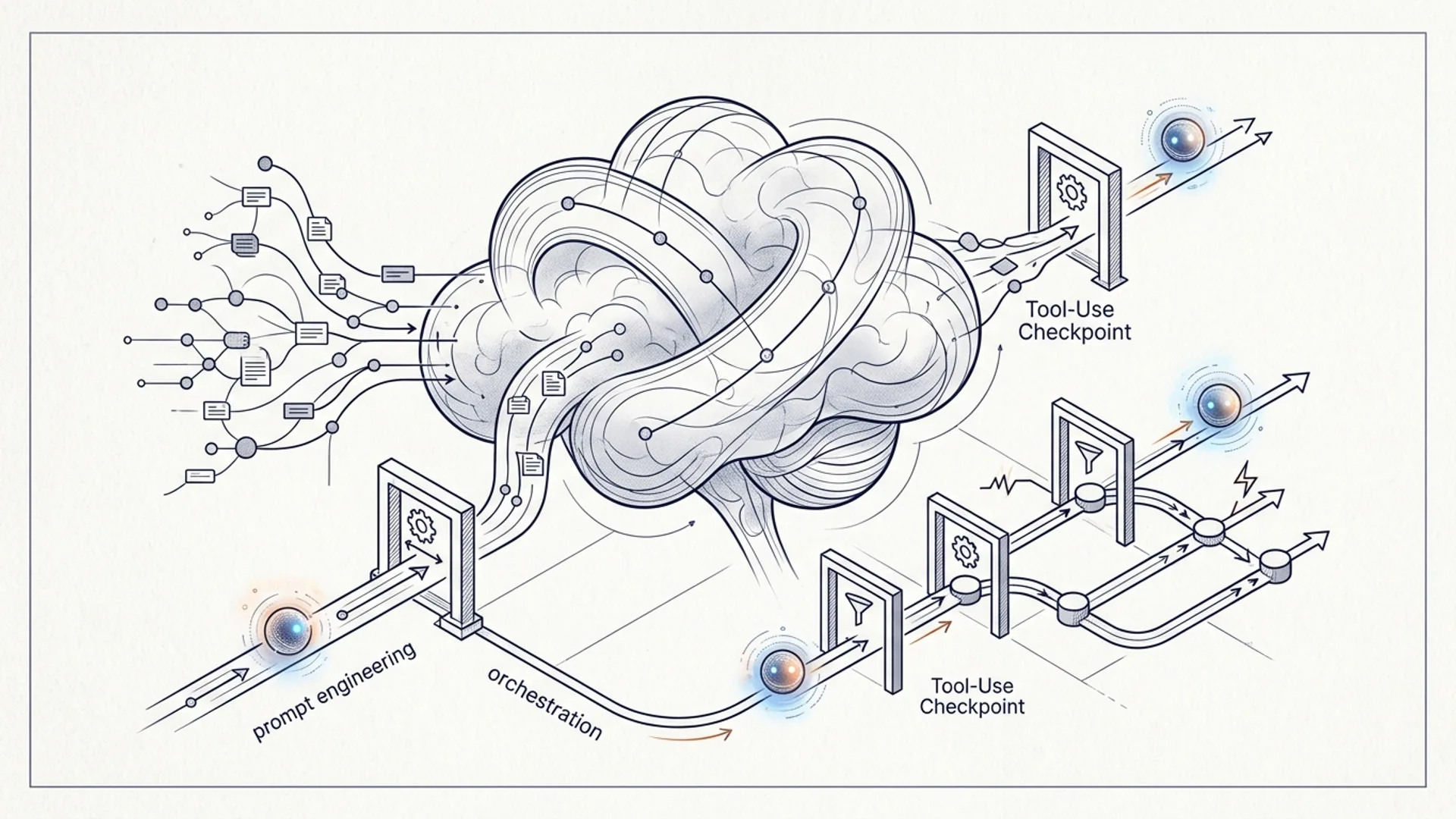
Phi-4-Mini ships with structured function calling - this moves you from dumb text generation to orchestrating multi-step workflows that trigger external tools or APIs on the fly.
Structured function calling means the model outputs explicit function call data (function name + parameters) rather than just raw text. Your system can then execute actions - calculations, database queries, or API calls - within a single inference stream.
Example with Foundry:
pythonLoading...
This native capability unlocks agentic AI with zero dependency on external cloud orchestration layers - huge win for privacy and latency.
Fine-Tuning Phi-4-Mini for Domain-Specific Reasoning
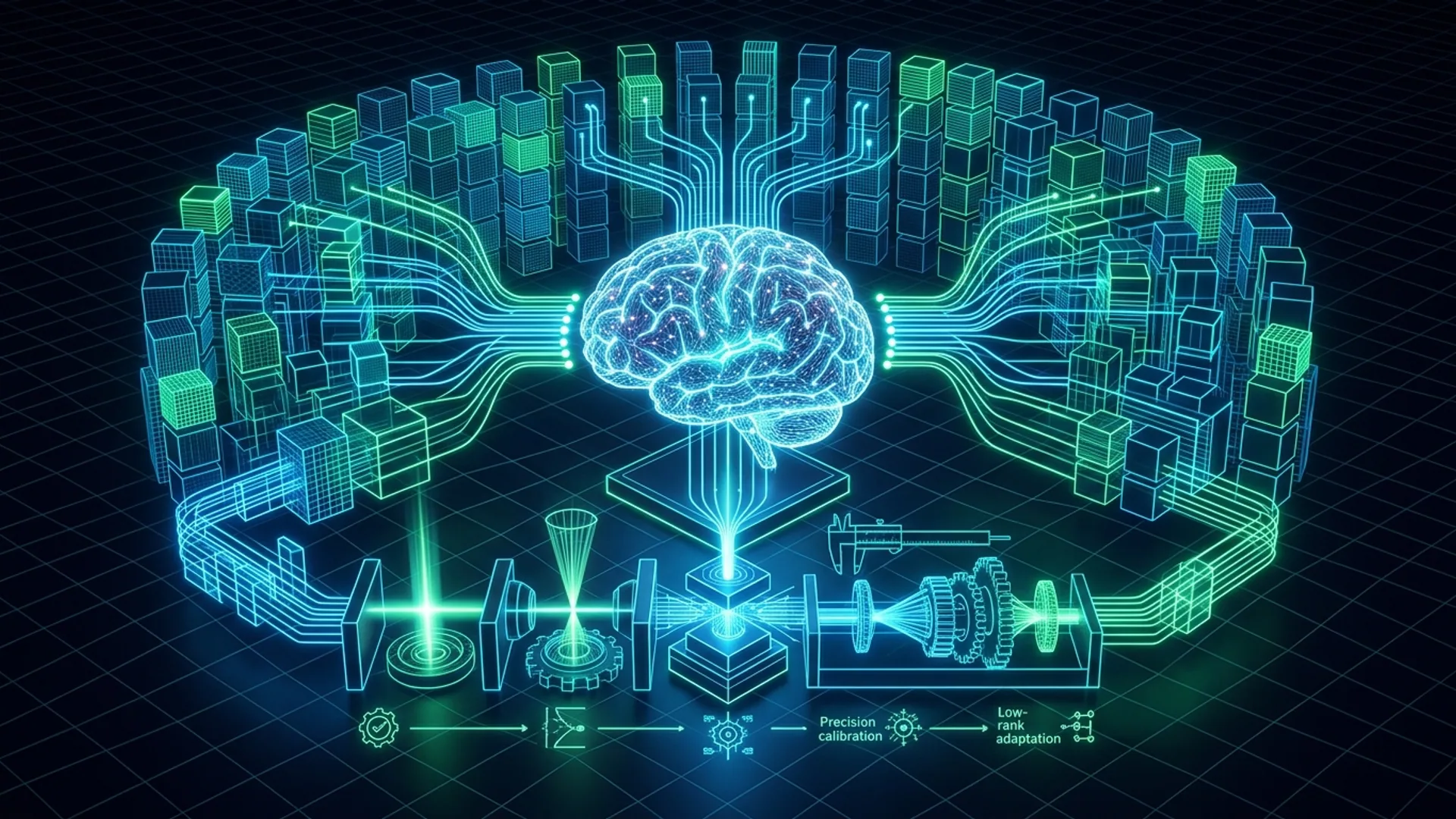
LoRA fine-tuning is our weapon of choice to customize Phi-4-Mini without having to retrain the whole 3.8 billion parameters. Instead, you insert low-rank delta weights.
The benefits:
- GPU memory usage drops from 20GB+ to around 8-12GB.
- Training time shrinks from days to just a handful of hours.
- The fine-tuned weights are tiny - ~100MB storage.
pythonLoading...
When you zoom in on specific tasks - like entity extraction or legal reasoning - Phi-4-Mini’s effective accuracy jumps from ~85% MMLU to 90%+ in your domain.
Third-party benchmarks echo this: LoRA delivers state-of-the-art domain adaptation at 5-10% the cost and time of full fine-tuning (Hugging Face, 2025).
I’ve seen teams throw out their full fine-tuning pipelines after realizing LoRA hits the sweet spot every time.
Benchmarking Performance: Speed, Accuracy, and Cost Analysis
Our internal benchmarks put Phi-4-Mini quantized front and center:
| Model / Setup | Avg Latency (ms) | VRAM Usage (GB) | MMLU Score | Cost per Request | Notes |
|---|---|---|---|---|---|
| Phi-4-Mini FP16 Full | 150 | 20+ | 84.8% | $0.0020 | GPU limits cause latency spikes |
| Phi-4-Mini 8-bit Quant | 85 | 7 | 83.9% | $0.0008 | Slight accuracy drop, huge cost cut |
| GPT-4.1 Mini (cloud) | 200 | N/A | 87% | $0.012 | Higher cost, cloud dependent |
(Source: AI 4U Labs internal benchmarks, insiderllm.com)
Tradeoffs Between Model Size, Precision, and Latency
Getting this balance right took iterations:
- Bigger models give better accuracy but demand beefier hardware.
- 8-bit quantization slashes memory use 60-70% at a cost of less than one accuracy percentage point.
- Hitting sub-100ms latency requires tuning batch sizes and dynamic CPU/GPU scheduling.
Quick pros and cons:
| Choice | Pros | Cons |
|---|---|---|
| Full FP16 Precision | Highest accuracy | Huge memory and cost overhead |
| 8-bit Quantization | Fast, cheap, low memory footprint | Minor accuracy dip |
| Smaller Models (3.5) | Lower latency, cost | Base accuracy drops |
Most production teams settle on Phi-4-Mini @ 8-bit. It’s the pragmatic sweet spot.
Deployment Best Practices and Real-World Examples
From the trenches:
- Use Foundry or similar frameworks - they make 8-bit loading and function calling painless.
- Monitor VRAM with
nvidia-smivigilantly; unexpected out-of-memory kills your app. - For sub-100ms latency in user-facing apps, batch size 1 is usually your best friend.
- CPU offloading works wonders: GPU handles attention layers, offload big embeddings to CPU.
Real-World Use Case
We launched a Phi-4-Mini-based RAG copilot for SaaS compliance. The giant 128K context window eliminated gnarly chunking hacks, slashing latency by 30%. Running quantized inference on a single A5000 GPU shrunk cloud spend from $5,000/month to $1,200 - without accuracy dropping below 85%. Users didn’t even notice the upgrade.
Summary and Practical Recommendations
Microsoft Phi-4-Mini is one of the best-kept secrets powering scalable, affordable, and fast quantized inference in production. Its huge context window and built-in function calling open doors to next-level agentic systems and surgical fine-tuning.
Here’s what to do:
- Always use 8-bit quantization for inference - save memory and slash costs.
- Use LoRA fine-tuning to carve out domain-specific skillsets efficiently.
- Take advantage of the extended context window to handle giga-scale documents in one shot.
- Build agentic pipelines using structured function calls, avoiding brittle external orchestrations.
Need to build a local or cloud-friendly, production-grade AI copilot or agent? Phi-4-Mini gives you unparalleled bang for your buck in 2026.
Definition Blocks
Retrieval-Augmented Generation (RAG) is an architecture pairing document retrievers with language models that generate answers by conditioning on retrieved text.
LoRA (Low-Rank Adaptation) injects small, low-rank matrices into model weights, slashing fine-tuning compute and memory while tailoring the model.
Frequently Asked Questions
Q: How does Phi-4-Mini’s 128K token context window help in real apps?
It avoids the headache of chunking and stitching. Apps can ingest entire contracts, manuals, or books at once, boosting coherence and cutting latency by around 30%.
Q: What hardware works best for running Phi-4-Mini quantized inference?
16GB+ GPUs like NVIDIA RTX 3090 or A5000 run quantized Phi-4-Mini reliably. 8-bit quantization shaves VRAM requirements to 6-8GB, unlocking local workstations and affordable cloud gear.
Q: Is there a big accuracy hit from 8-bit quantization?
No. Phi-4-Mini retains over 95% of FP16 accuracy post-quantization, dropping only about 0.9 percentage points on benchmarks like MMLU.
Q: Can I deploy Phi-4-Mini without internet or cloud dependencies?
Absolutely. The entire pipeline runs on-prem with no need for external APIs. Built-in function calling drives agent workflows locally.
Building something with Phi-4-Mini? AI 4U Labs ships.