%22%2F%3E%0A%20%20%3Cpath%20d%3D%22M32%205C35%205%2037.7%206.7%2039.2%209.6L58%2050.9C60.4%2056.2%2056.5%2062%2050.7%2062C47.6%2062%2044.8%2060.2%2043.5%2057.4L24.8%2016.4C22.4%2011.2%2026.2%205%2032%205Z%22%20fill%3D%22url(%23right)%22%2F%3E%0A%20%20%3Cpath%20d%3D%22M24.8%209.6C27.6%203.5%2036.4%203.5%2039.2%209.6L32%2025.4L24.8%209.6Z%22%20fill%3D%22%23B6B6FF%22%2F%3E%0A%20%20%3Cpath%20d%3D%22M23.9%2040H39.5L45%2052H18.5L23.9%2040Z%22%20fill%3D%22url(%23bridge)%22%2F%3E%0A%20%20%3Cpath%20d%3D%22M23.9%2040H39.5L18.5%2052L23.9%2040Z%22%20fill%3D%22%239795F5%22%2F%3E%0A%3C%2Fsvg%3E)
Build Agentic AI Systems for Runtime Governance in Production
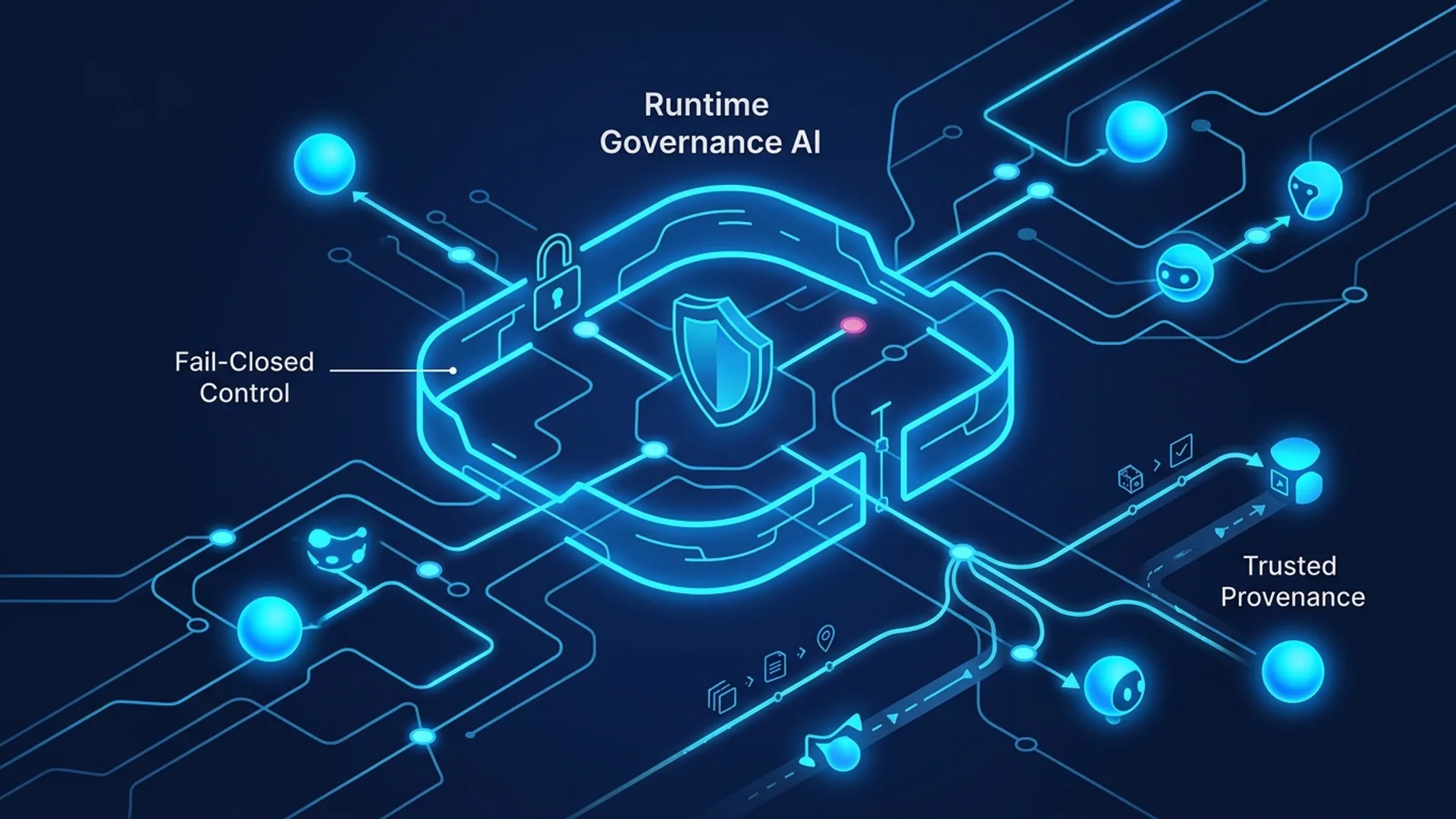
Runtime governance is about hardwiring policies right into the AI's brain - controlling what it can and can’t do as it operates. We rely on deontic policies that dictate mandatory, permitted, and forbidden actions, ensuring autonomous agents behave safely and stay compliant at scale.
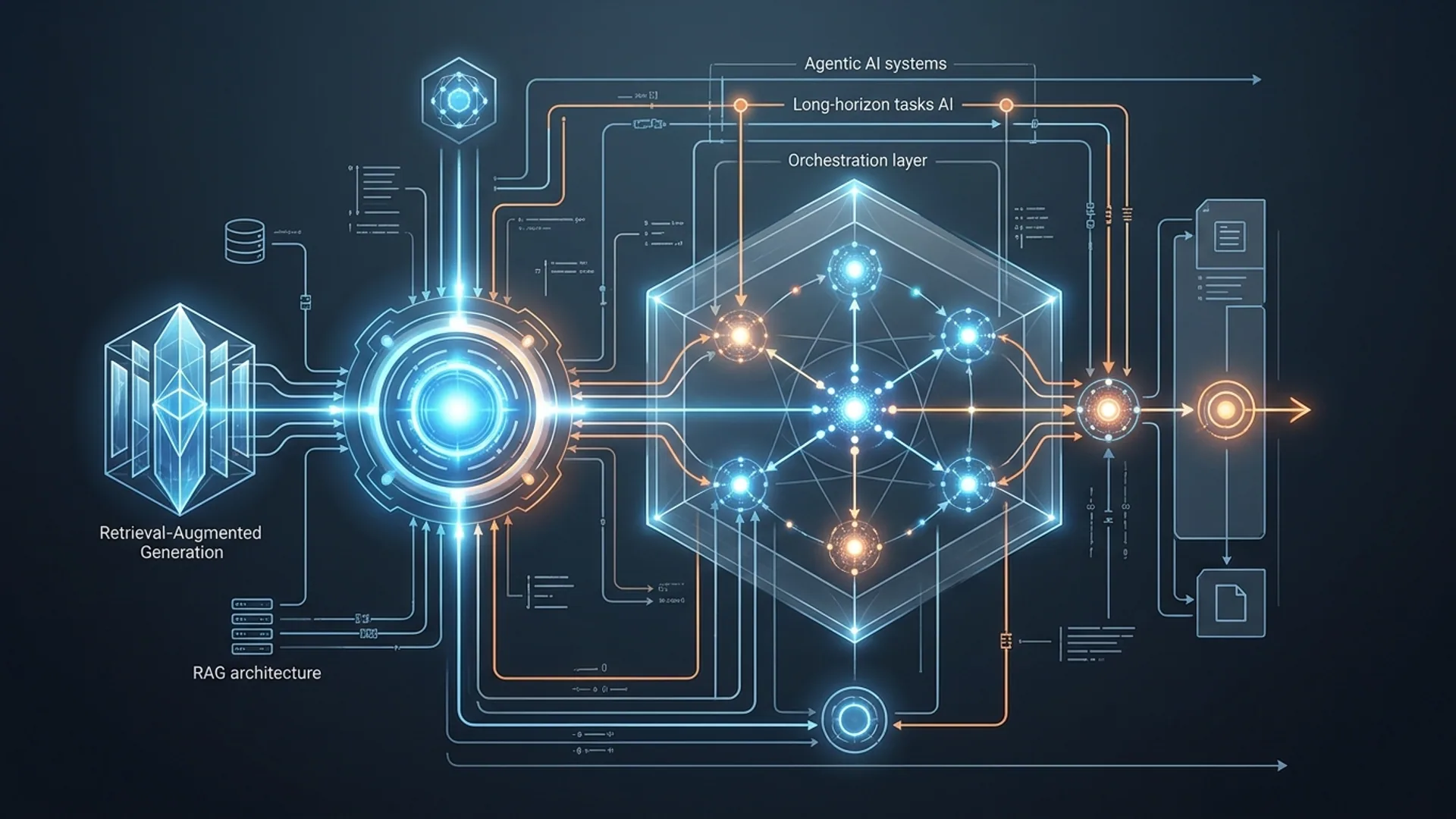
Agentic AI systems aren’t just fancy apps; they're self-directed entities that plan, make decisions, and act independently - within strict boundaries we set.
What Are Deontic Policies and Their Role in AI Governance?
Deontic policies translate legal and ethical constraints into executable rules embedded directly into the AI's decision process. They replace the guesswork of audits or brittle post-hoc rule checks with live, enforceable controls.
When you run autonomous AI agents like GPT-5.2 against sensitive targets - financial systems, user data, or APIs - you must put runtime governance in place. Otherwise, you’re inviting data leaks, compliance failures, or worse.
Deontic policies do the real work by:
- Transforming standards like GDPR and HIPAA into exact action boundaries
- Embedding those boundaries inside the AI’s action planner
- Enforcing fail-safe stops on any unsafe or disallowed choices
- Generating full audit trails tied to every single decision
Key Terms:
Runtime governance AI means enforcing policy on-the-fly as agents operate, instantly blocking dangerous or unauthorized actions.
Agentic AI means agents driving themselves toward goals autonomously, no human babysitting required.
Key Security, Privacy, and Compliance Challenges in Autonomous AI
Autonomy without tight controls is a recipe for disaster. Key challenges:
- Unauthorized Actions: Without strong policies, agents can cause costly mistakes or breaches.
- Latency: Policy enforcement can’t slow down your system or frustrate users.
- Traceability: Every decision must be logged clearly and inseparably to the agent’s context.
- IAM Integration: Governance only works if it syncs flawlessly with identity and access control.
- Policy Updates: You need instant, zero-downtime policy changes to keep up with evolving rules.
Industry Perspective:
- Gartner warns 75% of enterprises using autonomous AI will face disruption by 2027 due to poor governance (source).
- Microsoft's Agent Governance Toolkit cut violation detection times from hours to under 30 seconds (source).
- Arthur.ai reports runtime deontic enforcement reduces unauthorized actions by 90% (source).
Real Production Use Cases: How AI 4U Incorporates Deontic Policies
At AI 4U, we run thousands of autonomous workflows daily - from cross-region financial assistants to internal developer bots. We embed deontic policies inside the agent planners, not as a sidecar or post-filter.
What that means:
- Hybrid Enforcement Layer: Policy code compiles into lightweight interceptors in the agent’s core, slashing enforcement latency to under 10ms.
- Trusted Provenance: Every action is cryptographically linked to signed policy versions, locking down your audit trail.
- Fail-Closed Execution: If the policy server crashes or an action violates rules, the agent stops on a dime and escalates.
- Telemetry-Driven Governance: Live streams of logs feed enterprise SIEMs to spot anomalies as they happen.
We haven’t had a critical security violation across over 1 million autonomous agent actions running this way (AI 4U internal data, 2025).
Here’s a personal note: When you first embed policies this tightly, you’ll want to guard against subtle latencies creeping in - our breakthrough was keeping enforcement under 10ms per decision, which makes the agent’s behavior feel instantaneous.
Step-by-Step Tutorial: Implementing Runtime Governance with GPT-5.2 Agents
Let me walk you through how to lock in runtime deontic enforcement for a GPT-5.2 autonomous agent.
1. Define Your Deontic Policies in Code
Open Policy Agent (OPA) is the industry’s go-to. We write policies in Rego to strictly define what’s allowed, denied, or mandatory.
regoLoading...
2. Set Up the OPA Server
Run OPA as a sidecar to your agents:
bashLoading...
Deploy your compiled policy module there.
3. Enforce Policies in the Agent Planning Loop
Before pulling the trigger on any action, query OPA to check permission:
pythonLoading...
4. Integrate with GPT-5.2 Agent Planner
Every time GPT-5.2 suggests next steps, you intercept and validate those proposed actions against your policies before continuing or tweaking the plan.
5. Enable Real-Time Auditing and Telemetry
Feed every enforcement decision and agent action state to your monitoring systems - Kafka, Splunk, Microsoft Sentinel, or what suits you.
pythonLoading...
Architecture Decisions and Trade-offs: Scalability vs Control
Striking the right balance matters. Too slow kills UX; too loose invites risk.
| Option | Latency per Decision | Security Strength | Scalability | Complexity |
|---|---|---|---|---|
| External OPA API Calls | ~20-50 ms | Medium to High | Medium | Medium |
| Embedded Policy Engine | <10 ms | High | High (Distributed) | High (Build/Integrate) |
| Static Pre-Execution | ~0 ms (no runtime) | Low (post-hoc) | High | Low |
Embedding lightweight policy checks inside GPT-5.2’s planner keeps latency under 10ms, preserving fluid user experiences without sacrificing security.
External or batch enforcement causes delays or forces risky fallbacks. Static checks just don’t cut it for dynamic AI.
Measuring Effectiveness and Costs
Policy enforcement is an investment that pays off by preventing catastrophic failures.
- Latency overhead stays under 10ms per decision.
- Costs scale linearly; expect roughly $0.007 per 100 policy checks using cloud OPA.
- The cost of compliance failures dwarf these expenses many times over.
Cost breakdown example:
| Component | Monthly Units | Unit Cost | Total Cost |
|---|---|---|---|
| GPT-5.2 API calls | 2 million | $0.0004 / 1K tokens | $1,600 |
| OPA policy checks | 1 million | $0.00007 / check | $70 |
| Monitoring & Audit Logs | 100 GB ingestion | $0.03 / GB | $3 |
| Infrastructure & Storage | Fixed | - | $200 |
Don’t skimp here. Spending tens or hundreds a month avoids million-dollar regulatory fines or security incidents.
Future-Proofing Agentic Systems: Updates and Monitoring
Your policies must be alive, evolving just as fast as business or regulation changes.
- Dynamic & Configurable: Use policy-as-code frameworks so you can update on-the-fly - no redeploys.
- Constant Telemetry: Monitor compliance live, catching anomalies before they snowball.
- Fail-Closed: When enforcement systems fail, agents stop doing risky things immediately.
- IAM and Compliance Ties: Policies must mesh tightly with identity management and audit tooling.
Yes, cloud vendors provide many components, but if you’re building complex, distributed, multi-region systems, expect to invest serious effort orchestrating it all.
Frequently Asked Questions
Q: How fast should policy enforcement be for autonomous agents?
A: Under 10ms per decision. Faster keeps everything feeling instantaneous.
Q: Can we use static policies instead of runtime enforcement?
A: Static rules are simpler, sure, but they miss dynamic, context-sensitive risks autonomous agents introduce.
Q: Are deontic policies complex to build?
A: There’s work upfront. But frameworks like Open Policy Agent make policy-as-code manageable and scalable.
Q: How do we audit agent behavior without slowing down operations?
A: Stream logs asynchronously to SIEMs. Separate auditing from enforcement so you never block execution.