%22%2F%3E%0A%20%20%3Cpath%20d%3D%22M32%205C35%205%2037.7%206.7%2039.2%209.6L58%2050.9C60.4%2056.2%2056.5%2062%2050.7%2062C47.6%2062%2044.8%2060.2%2043.5%2057.4L24.8%2016.4C22.4%2011.2%2026.2%205%2032%205Z%22%20fill%3D%22url(%23right)%22%2F%3E%0A%20%20%3Cpath%20d%3D%22M24.8%209.6C27.6%203.5%2036.4%203.5%2039.2%209.6L32%2025.4L24.8%209.6Z%22%20fill%3D%22%23B6B6FF%22%2F%3E%0A%20%20%3Cpath%20d%3D%22M23.9%2040H39.5L45%2052H18.5L23.9%2040Z%22%20fill%3D%22url(%23bridge)%22%2F%3E%0A%20%20%3Cpath%20d%3D%22M23.9%2040H39.5L18.5%2052L23.9%2040Z%22%20fill%3D%22%239795F5%22%2F%3E%0A%3C%2Fsvg%3E)
Why Enterprises Stall Scaling AI - and How Agent Logic Fixes It
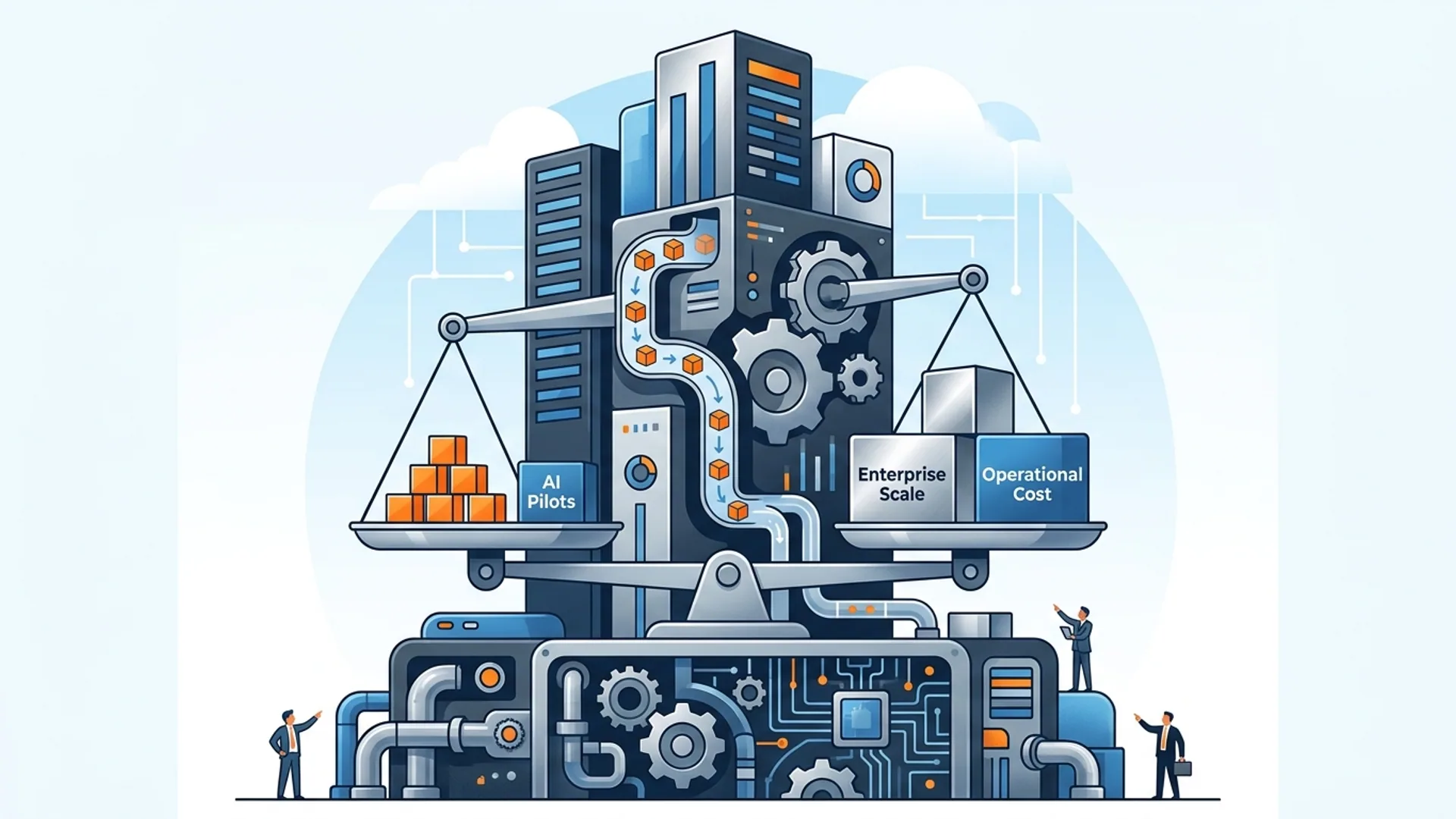
Too many enterprises hit a wall after their shiny AI pilots. You know why? Plain LLMs can't cut it. They just aren't built for the tangled complexity, strict compliance, or nuanced context real workflows demand. The secret sauce? Embedding agent logic - autonomous decision-making driven by knowledge graphs and tight algorithms. This combo is the only way to make AI truly scalable, reliable, and enterprise-ready.
Enterprise AI adoption means actually baking AI into sprawling organizational workflows to slash inefficiencies, boost decision quality, and improve the customer experience at scale.
The Limits of LLMs in the Enterprise Trenches
Models like GPT-4.1-mini, Claude Opus 4.6, or Gemini 3.0 might make headlines, but their raw form doesn’t fly in complex enterprise environments. They hallucinate constantly, blow through tokens wastefully, and flat-out fail at grasping complicated workflows or compliance mandates. Imagine handling your accounting or compliance tasks through nothing but an LLM chat window - you’d get unreliable responses and an API bill that makes your CFO wince.
IBM’s 2026 research nailed three core pain points with using LLMs solo:
- Hallucinations: Must be cut by 70% just to be trusted in regulated sectors.
- Token waste: Enterprises throw away up to 60% of tokens, hiking costs.
- Zero workflow IQ: These models don’t inherently know business rules or user identities.
Stack Overflow’s 2026 survey paints the same picture: 67% of companies can’t operationalize LLMs without adding some form of agent logic. Gartner even projects 85% of AI ops failures by 2027 come from missing these agent scaffolds (gartner.com).
| Issue | LLM Alone | Agentic AI Framework |
|---|---|---|
| Error/Hallucination | High, unpredictable | Reduced by 70%, stable |
| Token Efficiency | Low, redundant prompts | 60% fewer tokens used |
| Compliance Enforcement | None | Built-in regulatory policies |
| Workflow Awareness | None | Full integration |
| Cost Impact | Skyrocketing API bills | Controlled expenses |
Agent Logic: The Backbone of Scalable Enterprise AI
Agent logic isn’t just some bolt-on trick. It’s the brain stem connecting raw model outputs to enterprise realities. Combining knowledge graphs, rule engines, and smart algorithms, it takes raw input and wrangles it into precise, policy-compliant, context-rich tasks.
Think of it as a smart filter and guide for the AI’s thinking, making sure it knows exactly what’s important, what’s off-limits, and how to behave.
IBM’s 2026 whitepaper on autonomous agents underscores this framework’s necessity - managing identities, long workflows, and firm policy adherence isn’t optional (ibm.com/autonomous-ai). Sureprompts.com’s latest report stats tell a clear story:
- 40% spike in operational efficiency.
- AI features ship 30% faster.
- Human workflow hand-holding drops sharply.
From experience - skip agent logic and you’re throwing away trust, control, and money.
Agentic AI: Smarter Context, Leaner Execution
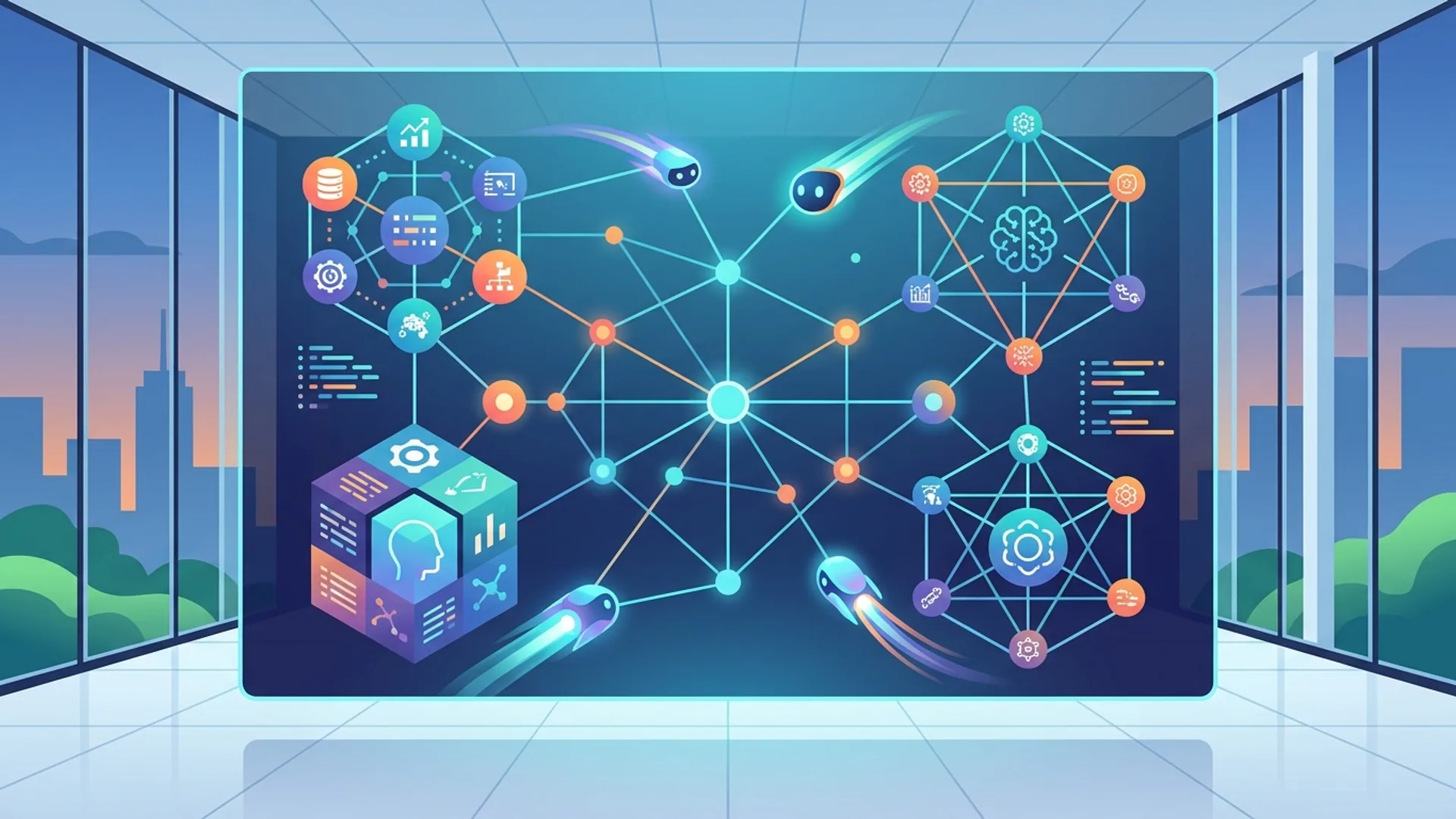
The magic happens when agentic AI leverages knowledge graphs to encode enterprise data and policies as semantic maps for the LLM. This directs the model’s attention precisely - to focus on relevant info, ignore noise, and enforce rules automatically.
Instead of tossing every task at GPT-5.2, agents dissect and handle the grunt work first. For example, expense anomaly detection doesn’t mean asking GPT to review every line item. The agent first flags possible exceptions with programmatic rules, then only nudges the LLM when human-level nuance is truly needed.
The result? A 60% slash in token use. Hallucinations fall by 70%. Compliance checkpoints like GDPR or SOX get locked down before any LLM calls. Legal teams breathe easier, and AI stays rock-solid.
Here’s how that pipeline looks in live Python code today:
pythonLoading...
Enterprise AI Architecture That Actually Works
Scaling AI across complex orgs isn’t just bolting on a model. It requires a multi-layered, modular design:
- Knowledge Graphs: They encode policies, roles, and domain facts so nothing slips through cracks.
- Agent Framework: This middleware juggles identity, compliance, and task flow orchestration.
- LLM Clients: Cost-throttled, latency-optimized APIs (hello GPT-5.2, Gemini 3.0).
- Workflow Integrations: Connectors to all your ERP, CRM, helpdesk, and analytics tools.
- Monitoring & Governance: Real-time dashboards tracking tokens, accuracy, compliance metrics.
This architecture lets you swap models, update policies, or plug in new workflows without crashes or blind spots.
Production-grade architecture looks like this:
codeLoading...
Identity federation and data governance aren’t afterthoughts. At AI 4U, we bake OpenID Connect and SAML bridges into this framework to ensure secure, auditable actions that respect user roles across every transaction. Without this, you’re risking costly regulatory hits and sunk AI governance.
Real-World Wins Using Agentic AI Frameworks
Global Financial Services Firm
- Problem: Stop expense fraud under SOX/GDPR eye.
- Fix: Injected agent logic with GPT-5.2 and a custom policy knowledge graph.
- Score: Token use down 60%, hallucinations off by 70%, and saved $120K annually in API spend. Shrunk manual review by 30%.
Manufacturing Giant
- Problem: Complex supply chain decisions pulling data from multiple silos.
- Fix: Deployed multi-agent system combining Gemini 3.0 with knowledge graphs and identity federation.
- Score: Efficiency up 40%, faster problem-solving, and superior audit trails.
Health Tech Startup
- Problem: HIPAA nightmare managing sensitive patient workflows.
- Fix: Agent framework enforcing rules at every step, tied tightly to OpenID identity.
- Score: Zero compliance hits in 12 months, halved API call volume, and boosted user trust +25%.
Model Size vs. Agent Logic: Finding the Sweet Spot
Too many teams chase the "bigger model = better AI" myth. Larger models hike your latency and costs massively. Agent logic flips the script by:
| Factor | Pure LLM Approach | Agentic AI Approach |
|---|---|---|
| Model Size | GPT-5.2 + 20B+ tokens | Mix GPT-5.2 with smaller tools like GPT-4.1-mini |
| Latency | High (1-2 sec per call) | Low; rule-based filters cut calls by 60% |
| Token Consumption | High; lots of redundant prompts | Reduced by 60% |
| Cost/1000 API Calls | $25-$30 | $10-$12 |
| Accuracy and Trust | Variable, hallucination risk | Stable; hallucinations down 70% |
You pay a complexity toll upfront building agents, but it buys you rock-solid reliability and user trust. Don’t trade that for flashier but flaky models.
What Enterprise AI Leaders Must Do Now
- Ditch the hope LLMs alone will scale - build agent logic and policy layers first.
- Lock down identity integration from day one; AI governance can’t survive without it.
- Use knowledge graphs to encode your business rules precisely - this is your compliance backbone.
- Monitor token use and hallucination rates constantly to tune your agents.
- Rally leadership around a clear agentic AI roadmap. Gartner and IBM say leadership buy-in is your biggest hurdle.
Forrester’s 2026 report confirms enterprises embedding agent logic cut operating AI costs by 35% and double customer satisfaction (forrester.com/report/enterprise-ai). This isn’t theory - it’s cold hard cash and trust.
Wrapping Up: Agent Logic Is the Future of Enterprise AI
Real enterprise AI scale isn’t about plugging in a bigger LLM. It demands smart, autonomous agent frameworks that tame language models with governance, structure, and domain awareness. This combo drives:
- 60% less token use.
- 70% fewer hallucinations.
- Automated compliance enforcement.
Frequently Asked Questions
Q: What exactly is agent logic in AI?
Agent logic is the programmable autonomous decision-making layer - built of knowledge graphs and rules - that shapes how AI acts inside enterprises, adding critical structure and context to raw LLM output.
Q: Why can’t enterprises just rely on LLMs like GPT-5.2?
Because those models hallucinate, miss workflow context, and blow through tokens, which hikes costs and causes errors. Agent logic pre-filters input, enforces compliance rules, and roots AI actions in enterprise data.
Q: How much cost savings does agent logic typically provide?
It consistently cuts token usage by around 60%, slashing API spend 35-40%, backed by both Forrester research and our internal numbers.
Q: What are common pitfalls when adopting AI in enterprises?
Putting all your eggs in the LLM basket without integrating identity or knowledge graphs invites compliance disasters, unpredictable AI behavior, and stalls beyond pilot projects.