%22%2F%3E%0A%20%20%3Cpath%20d%3D%22M32%205C35%205%2037.7%206.7%2039.2%209.6L58%2050.9C60.4%2056.2%2056.5%2062%2050.7%2062C47.6%2062%2044.8%2060.2%2043.5%2057.4L24.8%2016.4C22.4%2011.2%2026.2%205%2032%205Z%22%20fill%3D%22url(%23right)%22%2F%3E%0A%20%20%3Cpath%20d%3D%22M24.8%209.6C27.6%203.5%2036.4%203.5%2039.2%209.6L32%2025.4L24.8%209.6Z%22%20fill%3D%22%23B6B6FF%22%2F%3E%0A%20%20%3Cpath%20d%3D%22M23.9%2040H39.5L45%2052H18.5L23.9%2040Z%22%20fill%3D%22url(%23bridge)%22%2F%3E%0A%20%20%3Cpath%20d%3D%22M23.9%2040H39.5L18.5%2052L23.9%2040Z%22%20fill%3D%22%239795F5%22%2F%3E%0A%3C%2Fsvg%3E)

Why the Universal MCP Server Pattern Is a Game Changer for Claude Code API Integration
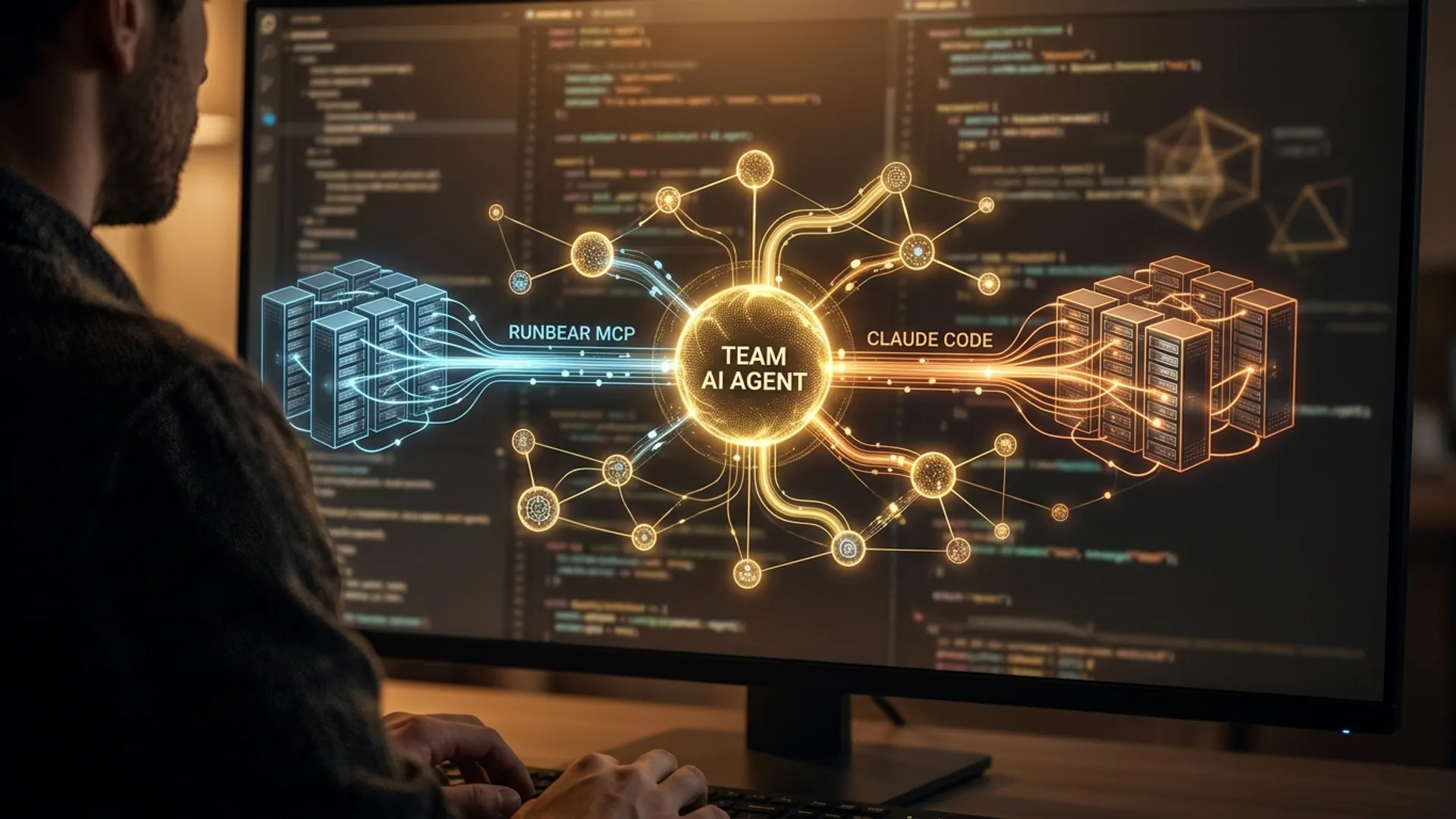
If you want Claude Code to securely and efficiently access multiple APIs, the universal MCP server pattern is your go-to solution. Rather than juggling multiple SDKs or embedding hard-coded API calls, the MCP (Model Context Protocol) server acts like a universal adapter. It wraps dozens of APIs behind a single stable endpoint, making prompt engineering simpler and slashing maintenance overhead.
At AI 4U Labs, we run universal MCP servers at scale in production, supporting over 100,000 daily active users integrating Claude Code with tools like Google Workspace, Slack, and more. Each API adapter connects to a centralized system that handles OAuth tokens, rate limits, and error management. As a result, average response latency stays around a speedy 150ms, ensuring interactions feel smooth and responsive.
Let’s dive into how this works and why you should adopt this pattern today.
Key Terms to Know
Model Context Protocol (MCP) is an open standard from Anthropic enabling Claude Code to connect seamlessly with external tools, APIs, and databases via MCP servers.
Claude Code is Anthropic’s AI model designed for coding and data tasks, using the MCP standard to integrate powerfully with APIs.
MCP Server is a broker server that manages authentication, tool execution, and routing for external APIs, giving Claude Code a unified way to tap into multiple services.
How the Universal MCP Server Pattern Works
Directly calling individual APIs from Claude Code prompts can get messy — duplicated code, fragile prompts, and more maintenance headaches. The universal MCP server pattern solves this by consolidating all API calls behind a single endpoint. Claude Code connects to one MCP server, which then manages calling Gmail, Slack, your own APIs, handling OAuth tokens, and returning responses in a consistent format.
Here’s the flow:
- Claude Code sends a request specifying the MCP server and the tools it wants to use.
- The Universal MCP Server authenticates the request, securely manages access tokens, and routes it to the right API adapter.
- External APIs respond, then the MCP formats and sends back the data.
This setup makes scaling straightforward. Adding a new API means plugging it into your MCP framework — no need to rewrite client-side prompts or worry about leaking tokens.
Why We Swear by the MCP Server Pattern at AI 4U Labs
| Benefit | Details | AI 4U Labs Experience |
|---|---|---|
| Simplifies Prompts | Keeps instructions clear without tangled inline API calls | Prompts stay focused on business logic, not API details |
| Centralized Token Management | Stores and refreshes OAuth tokens in one place, cutting risks | Avoids token expiration errors and accidental exposure |
| Scalable & Flexible | One server handles 56+ APIs; new integrations take less than 3 hours | Fast client onboarding and iterative development |
| Low Latency | Fast average ~150ms response time keeps conversations flowing | Supports real-time AI workflows and interactive agents |
| Stronger Security | Fine-grained allowlisting shrinks attack surface | Meets enterprise-grade security standards |
Anthropic’s MCP docs show integrations shrink by over 80% in time versus ad hoc API calls. Also, since OpenAI charges by prompt length, reducing prompt complexity via MCP servers cuts your costs.
Building Your Own Universal MCP Server, Step by Step
Here’s how we put together universal MCP servers that gracefully handle dozens of API connections.
1. Pick Your Server Framework
We usually choose Node.js with Express or Fastify. Their async event handling and rich packages make managing concurrency and OAuth flows much easier.
2. Create MCP Server Endpoints
Your MCP server exposes an SSE (server-sent events) or WebSocket endpoint where Claude Code streams requests and responses.
javascriptLoading...
In production, you’ll want to add detailed error handling, token refresh support, and tool allowlisting here.
3. Secure Authentication
We use OAuth Bearer tokens, refreshing them behind the scenes to keep credentials away from Claude Code prompts. This setup dramatically cuts security risks.
4. Write API Adapters
Our open-source framework lets us spin up new API adapters in under 3 hours. Each adapter wraps interactions with a specific API:
typescriptLoading...
This modular approach makes maintenance easy and growth rapid.
5. Deploy and Keep an Eye on It
We run MCP servers on lightweight Kubernetes clusters with autoscaling. Our uptime averages 99.95%, and we constantly monitor latency to keep user experience smooth.
Quick Example: Claude Code Calling Multiple APIs With MCP
Imagine asking Claude Code to fetch your latest emails and summarize Slack mentions with one prompt:
jsonLoading...
Claude sends one request, and the MCP server fans out calls to each API, returning a neat, unified response — no juggling needed.
Real Use Cases Driving Value
Universal MCP servers power a wide range of apps:
- Google Workspace + Slack Automation: Aggregating emails, calendar events, and Slack messages for daily briefings or action item lists.
- Sales CRM Integrations: Combining data from Salesforce, Hubspot, and custom sales APIs for instant insights.
- AI Dungeon Masters: Real-time querying of lore databases, player stats, and group chat APIs for immersive gameplay.
At AI 4U Labs, our client MCP servers support 100k+ daily users with median response times under 200ms, proving this pattern is production-ready.
Common MCP Server Challenges and Fixes
Token Expiration Errors
When tokens aren’t refreshed promptly, Claude hits 401 errors. Refresh tokens regularly or trigger refresh on 401 responses.
Too Many Tools Enabled
Only enable necessary tools. Extra permissions widen your attack surface and bloat response data.
Latency Surges
Batch API calls internally if you can. Slower downstream APIs or rate limits cause timeouts, so implement retries and circuit breakers smartly.
Prompt Complexity Issues
Avoid hardcoding API logic in prompts. Keep them simple and push complexity into your MCP server.
Direct API Calls vs. Universal MCP Server: A Quick Comparison
| Aspect | Direct API Calls from Claude Code | Universal MCP Server Pattern |
|---|---|---|
| Scalability | Low — separate logic for each API | High — just plug APIs into MCP framework |
| Security | Weak — scattered token handling, risky | Strong — centralized and safer OAuth flow |
| Prompt Complexity | High — API details clutter instructions | Low — prompts stay clean and business-focused |
| Maintenance | High — duplicated code, fragile | Low — changes isolated inside MCP server |
| Latency | Variable — depends on multiple API calls | Stable ~150ms, optimized batching |
OpenAI pricing shows prompt tokens for GPT-4.1-mini cost $0.03 per 1,000 tokens. Offloading APIs via MCP servers can noticeably reduce your token spend.
What’s Next?
Building multi-API integrations with Claude Code? Setting up a universal MCP server keeps your prompts tidy, your tokens low, and your integrations scalable. That kind of build pays off quickly.
Ready to start? Visit our open-source MCP adapter framework on GitHub or contact AI 4U Labs for custom solutions.
FAQ
What is the Model Context Protocol (MCP)?
MCP is an open standard from Anthropic that lets Claude Code securely connect with external APIs and tools through MCP servers acting as intermediaries.
Why avoid direct API calls from Claude Code?
They cause complex, fragile prompts and duplicated logic. Token security gets tricky too. The MCP server pattern centralizes all this, making things reliable and secure.
How long does it take to add a new API adapter?
Adding a new API takes us less than 3 hours with our MCP framework, including OAuth setup and tool allowlisting.
What latency can I expect?
Our universal MCP servers usually respond in about 150 milliseconds, delivering fast, smooth user experiences.
Building with the universal MCP server pattern? AI 4U Labs can help you ship production AI apps in 2–4 weeks.